- MEL 101: Fundamentals: MEL Programming Techniques with Kevin Mannens
- Character Design Pipeline: Production Art & Research Techniques with BARONTiERi
- Character Rigging: The Puppet Rig - Maya Rigging Techniques with Carlo Sansonetti
- Maya Cloth 101: Fundamentals: Cloth Techniques with Mark E.A. de Sousa
- The Skinned Character Rig: Skinning and Deformations with Carlo Sansonetti
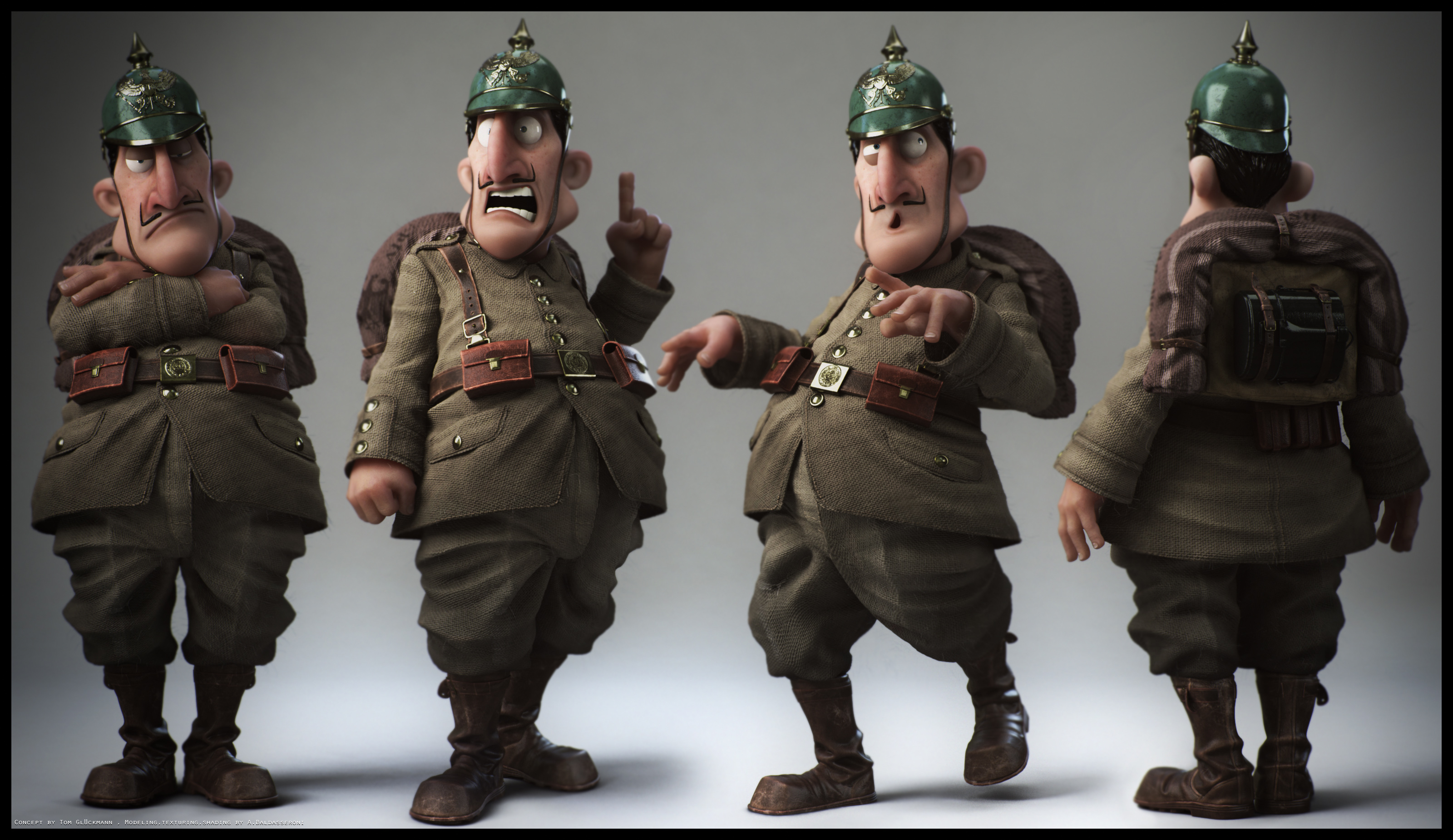
- Stylized Character Modeling for Production with Alessandro Baldasseroni
- Character Modeling for Production: Character Modeling Techniques with Ian Joyner
- Character Texturing for Production: Texturing techniques with Ben Neall (if I can get it)
- Creature Texturing and Rendering for Production: Texturing Techniques with Laurent Pierlot
Sunday, 30 October 2011
Gnomon Workshop & Other Learning DVDs
To supplement the books and papers, I'm going to also look at and reference Gnomon Workshop and Digital Tutor DVDs to develop my practical knowledge and skills, such as:
Books & such
While not so much a reference list and more of a bibliography, here is a few books that I own that will hopefully provide some information through my proposed project:
"Body Language: Advanced 3D Character Rigging" by Eric Allen and Kelly L. Murdock
"Art of Toy Story 3" by Charles Solomon and John Lasseter
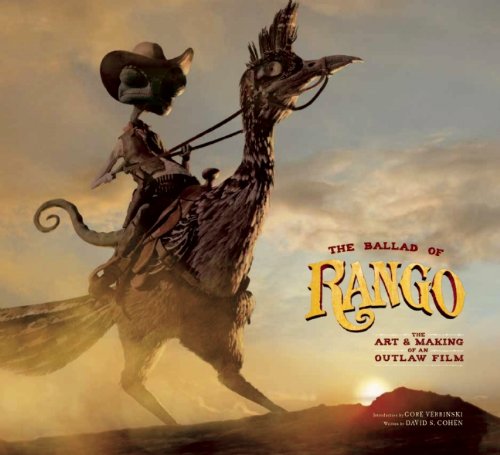
"The Ballad of Rango: The Art & Making of an Outlaw Film" by David S Cohen and Gore Verbinski
"The Cinematic Art of World of Warcraft: Wrath of the Lich King" by Blizzard Entertainment
"ZBrush Character Creation: Advanced Digital Sculpting" by Scott Spencer
I also hope to gain some up-to-date and current knowledge from watching the making-of sections of DVDs like
How to Train A Dragon
Up
Despicable Me
Toy Story 3
Rango
Alice in Wonderland
Narnia: The Witch and the Wardrobe
etc...
A mix of animated features and CGI/live action films will hopefully give me a decent understanding of what happens underwear the bonnet at many animation/CGI graphics studios.
I also have a subscription to Game Develop Magazine and ImagineFX, which should be a great source of information and help throughout the year.
This is just a start to the resources I have on hand. I hope to frequently update this blog with a list of suitable media throughout my project.
Some work
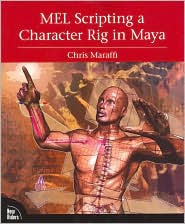
While I've been researching for my proposal, I've been trying to brush up on my practical skills. I recently got a book titled "MEL Scripting a Character Rig in Maya" by Chris Maraffi.
As I'm learning a brand new skill, I've only been following the examples in the book. The code I've written is the code found within the first chapters, but I have annotated it with comments to help me understand it better. I've also written a supplementary "cheat sheet" of commands and more general advice. Here's what I've done so far:
Cheat Sheet:
As I'm learning a brand new skill, I've only been following the examples in the book. The code I've written is the code found within the first chapters, but I have annotated it with comments to help me understand it better. I've also written a supplementary "cheat sheet" of commands and more general advice. Here's what I've done so far:
/*
Defining, Querying and Editing Variables
*/
//defined variables
int $num = 7;
float $dec = 3.267;
string $name = "mySphere";
int $nums[];
float $decs[5] = {7.23,1.0,20.7,0.567,12.0};
string $names[] = {"One", "Two", "Three"};
sphere -n $name -p 0 0 0 -ax 0 1 0 -ssw 0 -esw 360 -r 1 -d 3
-s 8 -nsp 4 -ch 1;
string $names[] = `sphere -n $name -p 0 0 0 -ax 0 1 0 -ssw 0
-esw 360 -r 1 -d 3 -s 8 -nsp 4 -ch 1`;
//print nodes
print $names;
//defining queryable variables
int $spans = `sphere -q -nsp $names[1]`;
int $radius = `sphere -q -r $names[1]`;
//query and print number of spans in sphere and the radius through the
//command node
print ("Number of spans: " + $spans + "\n");
print ("Radius: " + $radius + "\n");
//looks at sphere command and edits the radius to match the number of spans
sphere -e -r $spans $names[1];
/*
Defining the Selected Node and making it a variable
*/
string $selNodes[] = `ls -sl`;
print $selNodes;
/*
Selecting multiple nodes
*/
string $names[] = `sphere -n $name -p 0 0 0 -ax 0 1 0 -ssw 0
-esw 360 -r 1 -d 3 -s 8 -nsp 4 -ch 1`;
select -tgl $names[1];
string $selNodes[] = `ls -sl`;
print $selNodes;
/*
Change Get Value of X scale and set it as Y translate
*/
string $names[] = `sphere -n $name -p 0 0 0 -ax 0 1 0 -ssw 0
-esw 360 -r 1 -d 3 -s 8 -nsp 4 -ch 1`;
getAttr ($names[0] + ".sx");
setAttr ($names[0] + ".ty") 5;
/*
Catch sections attribute and set spans attirbute to match
*/
string $names[] = `sphere -n $name -p 0 0 0 -ax 0 1 0 -ssw 0
-esw 360 -r 1 -d 3 -s 8 -nsp 4 -ch 1`;
int $sections = `getAttr ($names[1] + ".s")`;
setAttr ($names[1] + ".nsp") $sections;
//Creates a new attribute that has a long name, short name and nice name, with a floating value
//that is keyable, minumum value of -10, maximum value of 10, default value of 0, readable and writeable
//affecting the tranform node of $names, i.e. Sphere.
addAttr -ln "myAttr" -sn "ma" -nn "My Attribute" -at "float"
-min -10 -max 10 -dv 0 -k 1 -r 1 -w 1 $names[0];
Cheat Sheet:
List of Useful MELScript Commands:
` = catches a return value
select -cl; = clears selection
select -r; = select node
select -tgl; = toggles a node
listAttr; = list all attributes on a node
getAttr; = query or get information on an attribute
setAttr; = edit or set information on an attribute
".sx" = define attribute (note flag here is short name for scale x)
EXAMPLE
getAttr ($names[0] + ".sx");
-k/-keyable =
EXAMPLE
//lists all keyables attributes on the transform node of the object
listAttr -k $names[0]
help = synopsis of the command
whatIs = tells if command is a procedure found in the MELscript folder when loaded
float = decimal number, may be also referred to as length/double
int = integer
string = text
vector/matrix = groups of numbers
"on"|"off" = "true"|"false". 1|0
rename = gives object new name
"/n" = new line
/* |
Hello World |= Block comment
*/ |
//Hello World = single line comment
[define type of flag] [variable name] = [result]
EXAMPLE:
int $num = 7;
OR
string $selNodes[] = `ls -sl`;
xform = consolidate multiple types of transforms with one command
Wednesday, 26 October 2011
Outside inspiration
Outside of art, my inspiration comes from many things, such as ancient culture, architecture, myths & legends, sculpture, etc... Here is an example of some of my general inspirations...
Ancient Culture & History
Ancient dead civilisations like the aztecs, the egyptians, the mayans, greek, romans, etc... are wonderful examples of the development of humanity over time, either through art, architecture and/or culture. They are brilliant sources of inspiration, for creating stories and art. Often, these cultures are closely linked with myth and legends - the source of all modern storytelling. Because of this, I often draw inspiration from these, though sometimes it may only be aethestic. Often myths were inspired from things the cultures did not understand (such as the day/night cycle or natural phenomenoms like extreme weather) and this primal need to tell a story round anything is what draws me to their stories...

Nature & the Natural World
A lot of my fascination is drawn from the living world around me, from plants to animal life. While this may seem a little generic or open, there is not a single source of inspiration I can point to for this. The way things move, the habits of creatures, the natural beauty of the world, geography, geology, etc...are all inspiring.
In particular, I am drawn to other forms of life, such as animals, reptiles & birds. A lot of my previous work draws from these sources.
Ancient Storytelling & Myth
As mentioned above, stories were humanity's way of trying to understand nature. All across the world, there are myths and legends to help explain the unknown. These stories are great fuel for inspiration, and a lot of great storytelling started here from the Greek myths to modern traditions such as the Mexican Day of the Dead.
Modern History & the Future of Humanity (speculation)
The source of inspiration for any sci-fi setting - modern history and the future is a topic of great interest for me. With the rise of technology and access to mass communication such as the world wide web, there is a lot of speculation as to what the future holds. It is generally inspiring for me to look at what the world was like 30 years ago, and see what my future might be.
Traditional Art
Lucian Freud
A true master of observational art, Lucian Freud has a certain way of capturing the ugly side of people without humiliating or ridiculing them. His paintings are always very gritty and textural, but often depict softer emotions in people despite their initial appearance. I prefer his newer art to his older pieces, finding them more truthful to the subject matter, but still keeping the essence of the person's emotional state intact.
Leonardo Da Vinci
Leonardo is a great inspiration for any modern artist who follows the classic principles. Not only was one of the great minds of the millennium, but he and the other renaissance artists made it so that modern day art is underpinned by an understanding of science. With formulae such as the golden ratio and the Vitruvian man, we now can construct art from our knowledge. This in particular appeals to me - someone who treads on the line between art and technology - creativity and science.
Thursday, 20 October 2011
Meet Meline
Meet Meline is a short animation made in 2 years by French artists Sebastien Laban & Virginie Goyons. From concept to final realisation - everything within the film (bar sound and music) was created by them. While the film itself is quite sweet, I personally see it more as a technical achievement - being able to perform so many roles with only two people.
However, what is even more interesting and insightful is the "Making of" featurette which shows a behind the scenes of the entire making of the movie. While incredibly basic, it explain the process in which an animation like "Meet Meline" is made from concept, to production to post-production. For the keen eye, the footage shown throughout breaks the process down even further - allowing artists to see even further into the creation process.
What came as a surprise mostly to me, is how much work is done with post-production. The film is broken down into multiple composite images, rather than final renders, and highlights a process in the making of animation films and short I know very little about.
It is a brilliant resource to get started on, and also that if two (though highly talented individuals) can make something of this calibre - then I can certainly can take a character from conception to final (with all the bells and whistles) for my honours project.
Original Vimeo Link to "Meet Meline"
However, what is even more interesting and insightful is the "Making of" featurette which shows a behind the scenes of the entire making of the movie. While incredibly basic, it explain the process in which an animation like "Meet Meline" is made from concept, to production to post-production. For the keen eye, the footage shown throughout breaks the process down even further - allowing artists to see even further into the creation process.
What came as a surprise mostly to me, is how much work is done with post-production. The film is broken down into multiple composite images, rather than final renders, and highlights a process in the making of animation films and short I know very little about.
It is a brilliant resource to get started on, and also that if two (though highly talented individuals) can make something of this calibre - then I can certainly can take a character from conception to final (with all the bells and whistles) for my honours project.
Original Vimeo Link to "Meet Meline"
Wednesday, 19 October 2011
Alessando Baldasseroni
http://www.eklettica.com/index.html
Very inspirational artist who works with one of the biggest cinematics companies today - Blur. His work showcases some of the most amazing examples of character art for 3D production.
He also shows a lot of the behind the scenes shots, which is great for a budding artist like me! What interests me the most is that not only is he a modeller and texture artist, but also a surface artist!
Very inspirational artist who works with one of the biggest cinematics companies today - Blur. His work showcases some of the most amazing examples of character art for 3D production.
He also shows a lot of the behind the scenes shots, which is great for a budding artist like me! What interests me the most is that not only is he a modeller and texture artist, but also a surface artist!
Scotland loves Animation
Thought it was worth mentioning that I attended a very interesting and inspiring workshop on Friday 14th October. It was presented by Merlin Crossingham of Aardman Animation and Richard Scott of Axis Animation.
The workshop itself was very useful, but perhaps the most insightful part of the day was the Q & A, which solidified a lot of thoughts, hopes and fears I had of the animation/production industry - name that key skills are valuable, as they cannot be taught - though something like Maya and Photoshop can. Sometimes I feel I get caught up in not knowing enough. While knowledge is equally important, I shouldn't neglect the skills that brought me here - even if I do pursue a career in something like technical art/animation.
Subscribe to:
Posts (Atom)